
Sliding Patio Doors vs French Doors: Which One Is Right for Your Home
You've been browsing options for your back entrance, and you've seen both sliding patio doors and French doors. They both look great. But what's the difference between the two? And which one makes sense for your home?
Those are fair questions, and they deserve straight answers. Choosing between sliding patio doors and French doors comes down to more than just looks. Space, budget, maintenance, and energy efficiency all play a role. And with a purchase that can easily run $2,000–$3,500 or more, you want to get it right the first time.
At Graber Supply in Amboy, Indiana, we've been helping homeowners across north-central Indiana choose the right doors and windows for over 35 years. As a certified Andersen dealer, we carry both styles and know which questions to ask to help you find the right fit.
Keep reading for the doorway to making a confident, informed decision.
TL;DR - Sliding Patio Doors vs French Doors
- Sliding patio doors are more affordable, space-saving, and modern in appearance. They are a good fit for smaller spaces and contemporary home styles.
- French doors offer a wider opening, a classic look, and potential resale value, but they cost more and require floor clearance to swing open.
- Both are energy-efficient when built with quality materials. The brand and construction matter more than the style.
- Maintenance is minimal for both. Sliding doors need track cleaning; French doors need occasional hinge and weatherstripping checks
What Are Sliding Patio Doors?
Sliding patio doors, sometimes called gliding doors, are exactly what they sound like. Two large glass panels sit on a horizontal track, with one fixed and the other sliding open and closed. No swinging. No floor clearance needed. Just a smooth glide.
They became popular in the mid-20th century, and they've never really gone out of style. It's easy to see why. They let in a lot of natural light, they feel modern and clean, and they work well in smaller spaces.
Here's a quick look at what makes sliding doors stand out:
- Space-saving design: they don't swing into your room or onto your patio
- Wide glass panels: offer an unobstructed view of the outdoors
- Clean, modern look: fits well with contemporary home styles
- Generally more affordable: lower cost than French doors in most cases
- Easy operation: great for high-traffic areas like patios and decks
At Graber Supply, we carry Andersen sliding patio doors, which are built for both performance and long-term durability.
What Are French Doors?
French doors have been around for centuries. Interestingly, some historians suggest they didn't actually originate in France at all. The design is thought to have started in Renaissance Italy, where large glass openings were used to connect indoor spaces to outdoor gardens. The style eventually made its way to France, and the name stuck.
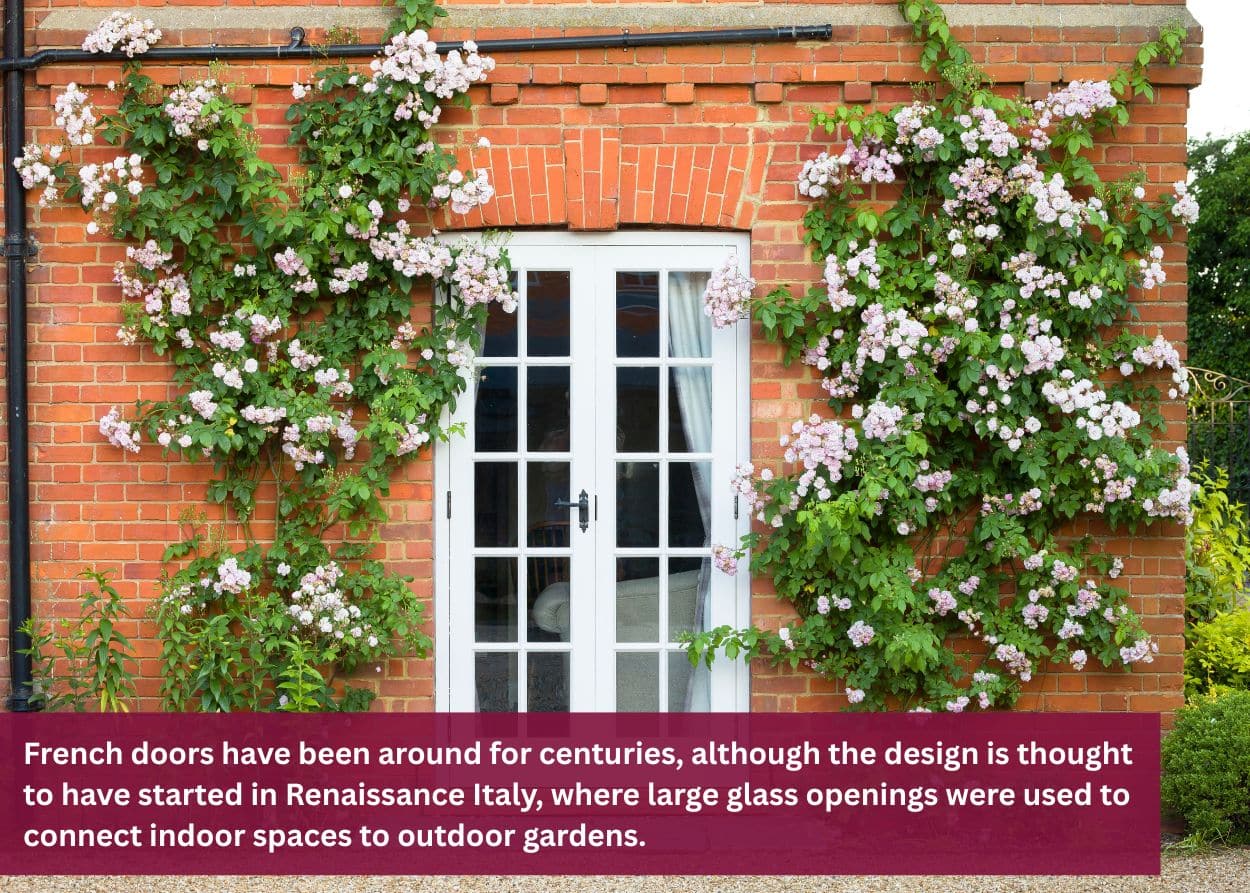
The design itself is simple but timeless. Two hinged door panels meet in the center and swing open, either into the room or outward onto a patio. When both panels are fully open, you get a wide, dramatic entryway.
They're a popular choice for homeowners who want a more traditional or classic look. They work well in a variety of settings — back patios, dining rooms, sunrooms, and even interior spaces like a home office or living room.
What sets French doors apart:
- Classic, elegant appearance: works well with traditional, farmhouse, and Craftsman styles
- Full opening width: both panels open for a wider entryway, great for moving furniture
- Versatile placement: can be used as both interior and exterior doors
- Strong locking system: multiple lock points offer added security
- Potential resale value: French doors can add curb appeal and may raise a home's resale value
Graber Supply carries Andersen French and hinged doors, designed to make a dramatic statement while allowing plenty of light and ventilation.
Six Key Differences Between Sliding Patio Doors and French Doors
Now that you know the basics, let's get into what really separates these two door styles.
- Space Requirements
This is often the deciding factor, and it's one of the most practical things to consider.
Sliding doors glide along a track, so they take up zero floor space when open. On the other hand, French doors are hinged, so they need room to swing open, which can be a problem in smaller spaces.
If your room is tight or your patio space is narrow, sliding doors are the better choice.
- Aesthetics and Style
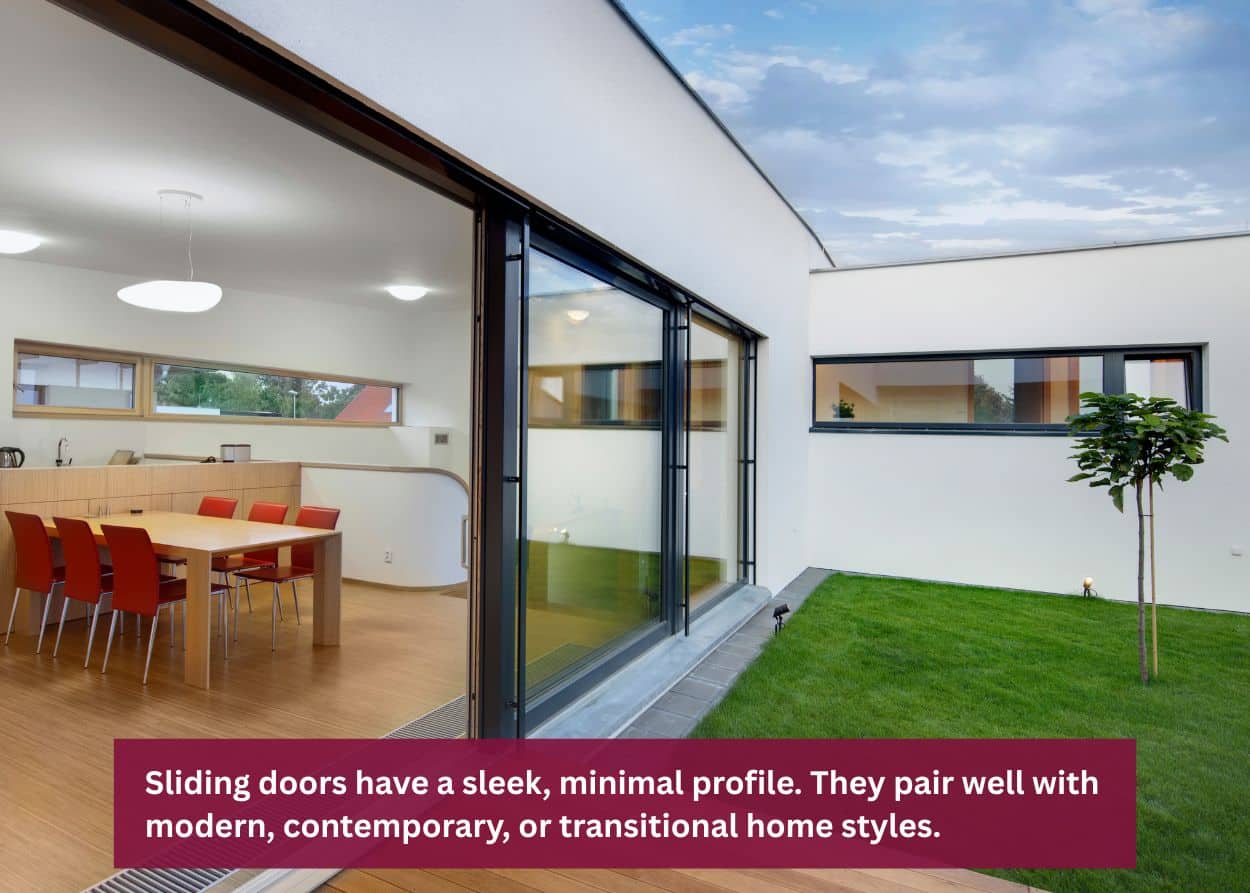
Sliding doors have a sleek, minimal profile. They pair well with modern, contemporary, or transitional home styles. French doors bring a more formal, classic feel. Their classic look goes with many home styles, including modern farmhouse, revival, midcentury ranch houses, and classic Cape Cods.
Think about what already exists in your home. Which style feels like a natural fit?
- Energy Efficiency
This is a big one for Indiana homeowners, where winters can be cold, and summers can be humid.
Both door types can be highly energy-efficient when built with high-quality materials. Modern French doors often create a tight seal when closed, and high-end sliding doors now use advanced weatherstripping that can be just as effective at stopping air leaks. The best choice really depends on your personal style and your home's layout.
That said, the quality of the door matters more than the style. Look for:
-
- Double or triple-pane glass with argon gas fill
- Low-E coatings to reflect heat and block UV rays
- Quality weatherstripping — especially important for sliding door tracks, which can wear over time
- Natural Light
Both sliding and French doors bring in a lot of natural light. Sliding doors have a slight edge here because their minimal frame means more unobstructed glass and more light. French doors have more frame and hardware visible, which slightly reduces the total glass area.
- Maintenance
Neither door style is high-maintenance, but each has its own upkeep needs.
Sliding doors require regular track cleaning. Dirt, dust, and debris accumulate in the bottom track, making the door hard to slide. The two main issues you may face with sliding door tracks are rust and grime buildup. Lubricating the tracks regularly helps prevent rust, and a damp cloth or toothbrush can remove more stubborn debris.
French doors require attention to hinges and weatherstripping. The hinges can loosen over time, and the weatherstripping needs to be checked periodically to maintain a good seal.
Neither option is overly demanding. It mostly comes down to routine cleaning and occasional hardware checks.
- Cost
Budget matters, and this is one area where the two options differ.
Sliding patio doors are generally the more affordable option. French doors typically cost more, due to the additional hardware, hinges, and more complex installation involved. Both door types have varying prices based on frame material, energy efficiency features, and door size, so the final difference will depend on the specific options you choose.
Pros and Cons of Each Option
Here's a side-by-side summary to make the comparison easy.
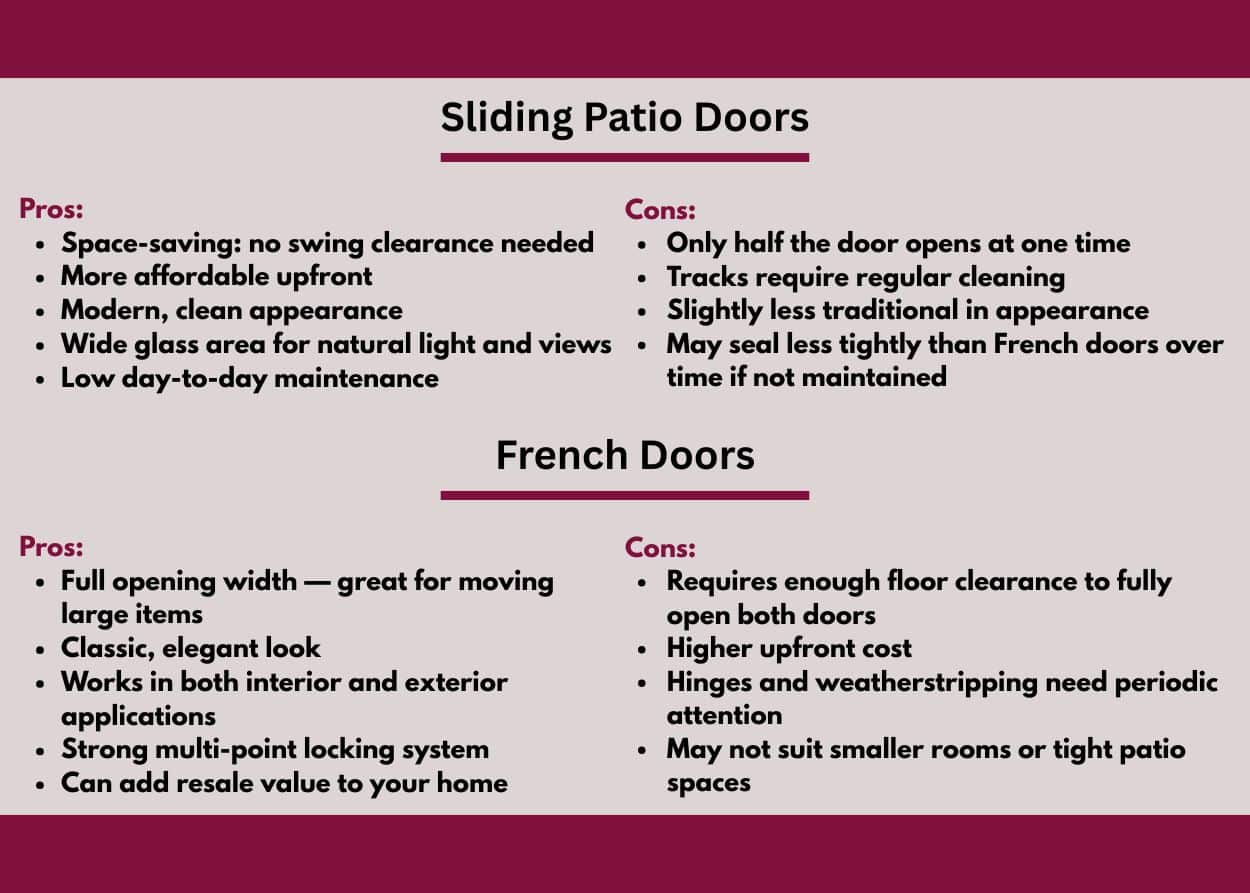
Sliding Patio Doors
Pros:
- Space-saving: no swing clearance needed
- More affordable upfront
- Modern, clean appearance
- Wide glass area for natural light and views
- Low day-to-day maintenance
Cons:
- Only half the door opens at one time
- Tracks require regular cleaning
- Slightly less traditional in appearance
- May seal less tightly than French doors over time if not maintained
French Doors
Pros:
- Full opening width — great for moving large items
- Classic, elegant look
- Works in both interior and exterior applications
- Strong multi-point locking system
- Can add resale value to your home
Cons:
- Requires enough floor clearance to fully open both doors
- Higher upfront cost
- Hinges and weatherstripping need periodic attention
- May not suit smaller rooms or tight patio spaces
Which Door Is Right for Your Home?
The right door depends on your specific situation. Here's a simple way to think it through.
Choose a sliding patio door if...
- You have a smaller room or a narrow patio where swing clearance is an issue
- You prefer a modern, minimalist look
- You want the largest possible glass area for views and natural light
- You're working with a tighter budget
Choose French doors if...
- You have plenty of floor space on both sides of the door
- Your home has a traditional, farmhouse, or classic style
- You want the widest possible opening, especially useful if you move large items in and out or want a more dramatic view out the back
- Resale value is a priority
Still not sure which one fits your space?
The team at Graber Supply can walk you through both options, show you what's available in the Andersen line, and help you figure out what makes the most sense for your home.
Finding the Right Fit
Both sliding patio doors and French doors are solid choices. The goal is simply finding the one that works best for your home, your space, and your budget.
Let’s look at a plan for helping you choose:
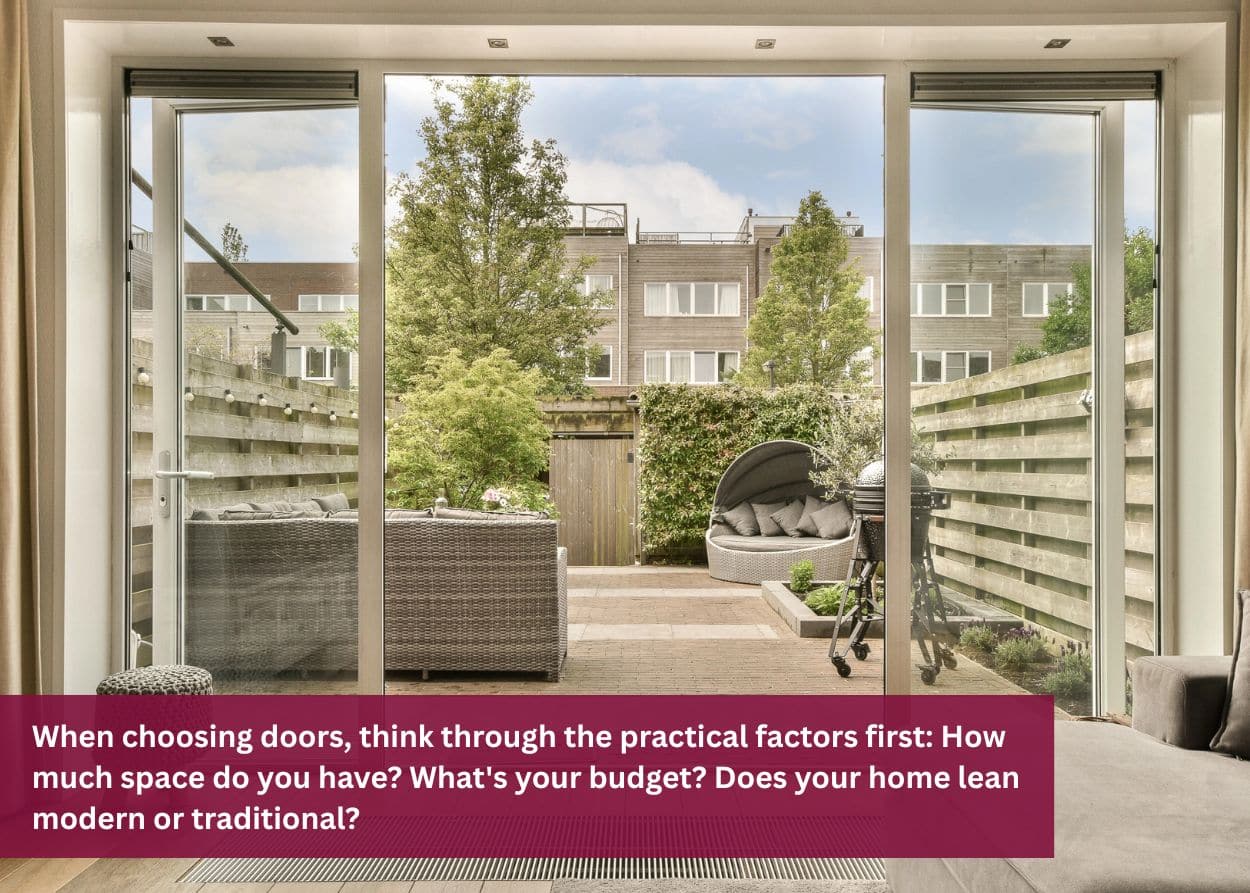
- Think through the practical factors first: How much space do you have? What's your budget? Does your home lean modern or traditional?
- Browse your options: Take a look at our supply of Andersen's sliding and French doors
- Talk to the Graber Supply team: With over 35 years of experience and certified Andersen expertise, we'll help you find the right door without the guesswork. Request a quote or visit our showroom in Amboy, Indiana.
The right door is out there. Let's help you find it!
While we’re on the subject of doors, here are two more articles that may be helpful:
9 Reasons A New Home Entry Door Is The Right Choice (and how to choose the right one)!
Home Storm Doors: The Ultimate Guide [including their 6 main benefits]