
Bathroom Cabinet Maintenance: Simple Ways to Help Your Cabinets Last for Years
Bathroom cabinet maintenance can feel like “one more thing” on a long to-do list. Because bathrooms are humid, high-traffic spaces, your cabinets take a daily beating from steam, splashes, cleaning chemicals, and constant use. If they’re not cared for, wood swells, paint peels, doors sag, and your bathroom looks worn long before it should.
At Graber Supply, we understand how moisture and daily wear break down bathroom cabinets. As a long-time building supply company, we’ve spent decades helping families choose better materials, fix common issues, and make simple changes to help their cabinets last longer.
This guide walks you through five practical bathroom cabinet maintenance tips: how humidity affects different materials, how to protect cabinets with the right finish, how to clean cabinets safely, how to care for your hardware, and when it’s time to repair, repaint, or replace.
Let’s dive in.






TL;DR - Bathroom Cabinet Maintenance
- Bathrooms are humid, so cabinets are always fighting moisture, steam, and daily wear.
- Control humidity with a fan, open windows when you can, and wipe condensation off cabinet fronts.
- Protect your cabinets with a good finish, intact caulk lines, and gentle cleaning.
- Don’t forget hardware: clean, tighten, and adjust hinges and handles so doors stay straight and close smoothly.
- If cabinets are soft, swollen, musty, or badly peeling, it may be time to replace them.
How Humidity Damages Bathroom Cabinet Materials
First, let’s talk about the real troublemaker: humidity.
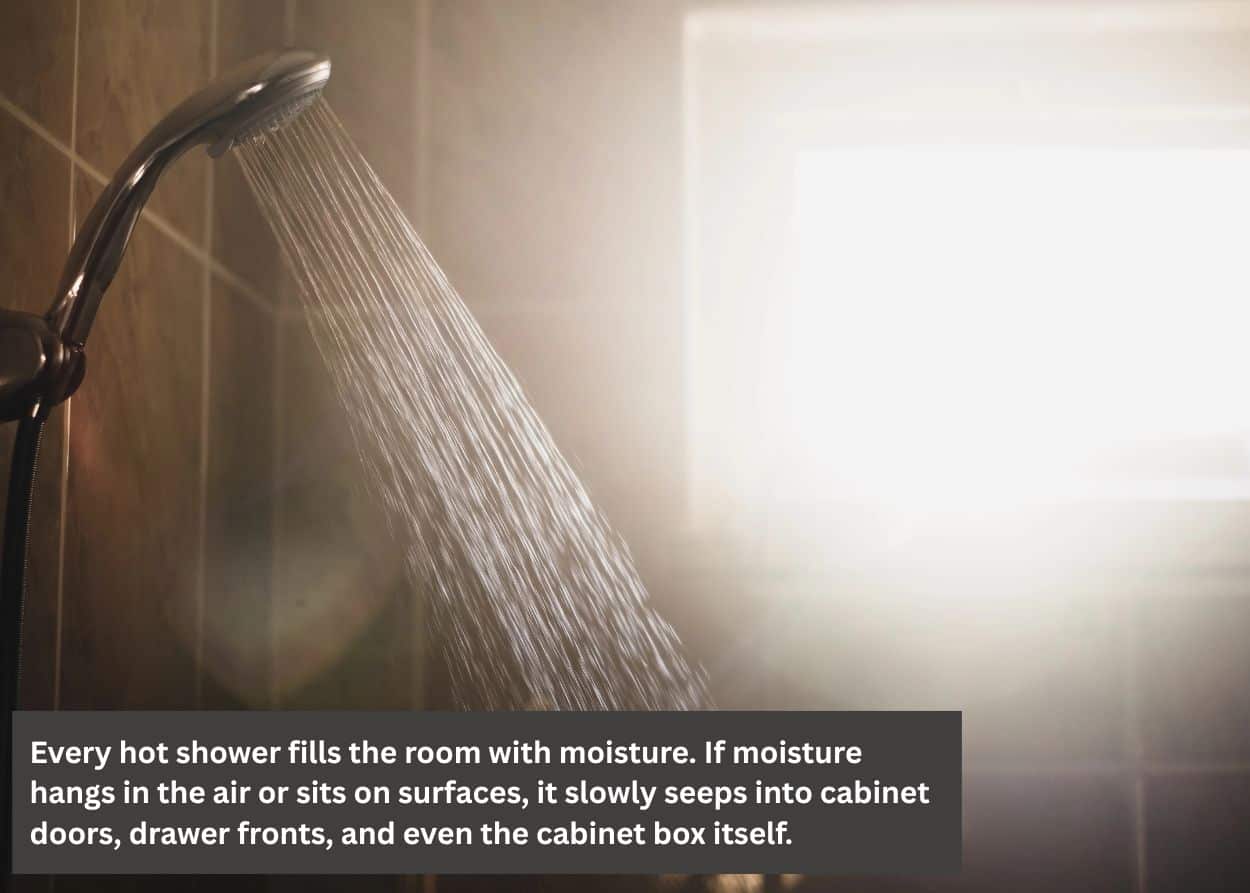
Every hot shower fills the room with moisture. If moisture hangs in the air or sits on surfaces, it slowly seeps into cabinet doors, drawer fronts, and even the cabinet box itself. The EPA notes that moisture control is the key to preventing mold and protecting your home.
Here’s how humidity affects common cabinet materials:
Solid wood
- Beautiful and strong, but it naturally expands and contracts as humidity changes.
- Over time, this causes small cracks in paint, slight warping, or doors that don’t line up as well.
Plywood
- Handles moisture better than particleboard or basic MDF.
- Not happy with standing water or constant dampness.
MDF (medium-density fiberboard)
- Great for smooth painted finishes.
- If water reaches bare edges or corners, MDF can swell, bubble, and crumble.
So what can you do?
Think of humidity like slow, gentle rain inside your bathroom. You might not notice damage right away, but over time it adds up. The goal is to limit how much moisture reaches your cabinets and how long it sits there.
A few habits that help:
- Run your exhaust fan during and after showers. Many experts recommend at least 20 minutes after you’re finished to fully clear the air.
- If you don’t have a fan, crack a window when the weather allows.
- Wipe visible condensation off cabinet fronts, especially near the sink and shower.
Keeping indoor humidity between about 30–50% is a common recommendation to prevent mold and moisture damage.
Sealing and Finishing: Your Moisture Shield
If humidity is the rain, your cabinet finish is the raincoat.
When the finish is in good shape, it helps keep moisture on the surface, where you can wipe it away. When the finish is worn, scratched, or peeling, water can seep into the wood or MDF underneath and cause serious damage.
Here’s what to keep an eye on:
- Dull or rough spots where the shine is gone
- Peeling or flaking paint around the sink or near the floor
- Bare edges on cabinet doors, drawer fronts, or toe-kicks
If you see those problems, it may be time for touch-up paint, a new clear coat, or even refinishing before swelling starts.
You should also check the caulk line:
- Where the countertop meets the wall behind the sink
- Around the sink edge where it meets the countertop
If the caulk is cracked or missing, water can run straight into the cabinet box below. Resealing these areas is a small job that pays off big.
Best Cleaning Methods to Avoid Scratches, Fading, or Peeling
Now let’s talk about cleaning—because this is where a lot of accidental damage happens.
Harsh chemicals, scrub pads, and soaking-wet rags can all ruin a good finish, even if you’re trying to “deep clean.”
At Graber Supply, we recommend starting with a cleaner that’s made for this kind of job. Kleens All Mild Organic Cleanser mixed with water is gentle on cabinet finishes but strong enough to handle normal bathroom splatters. One of our cabinet vendors trusts it so much they include a bottle with every cabinet job we purchase.
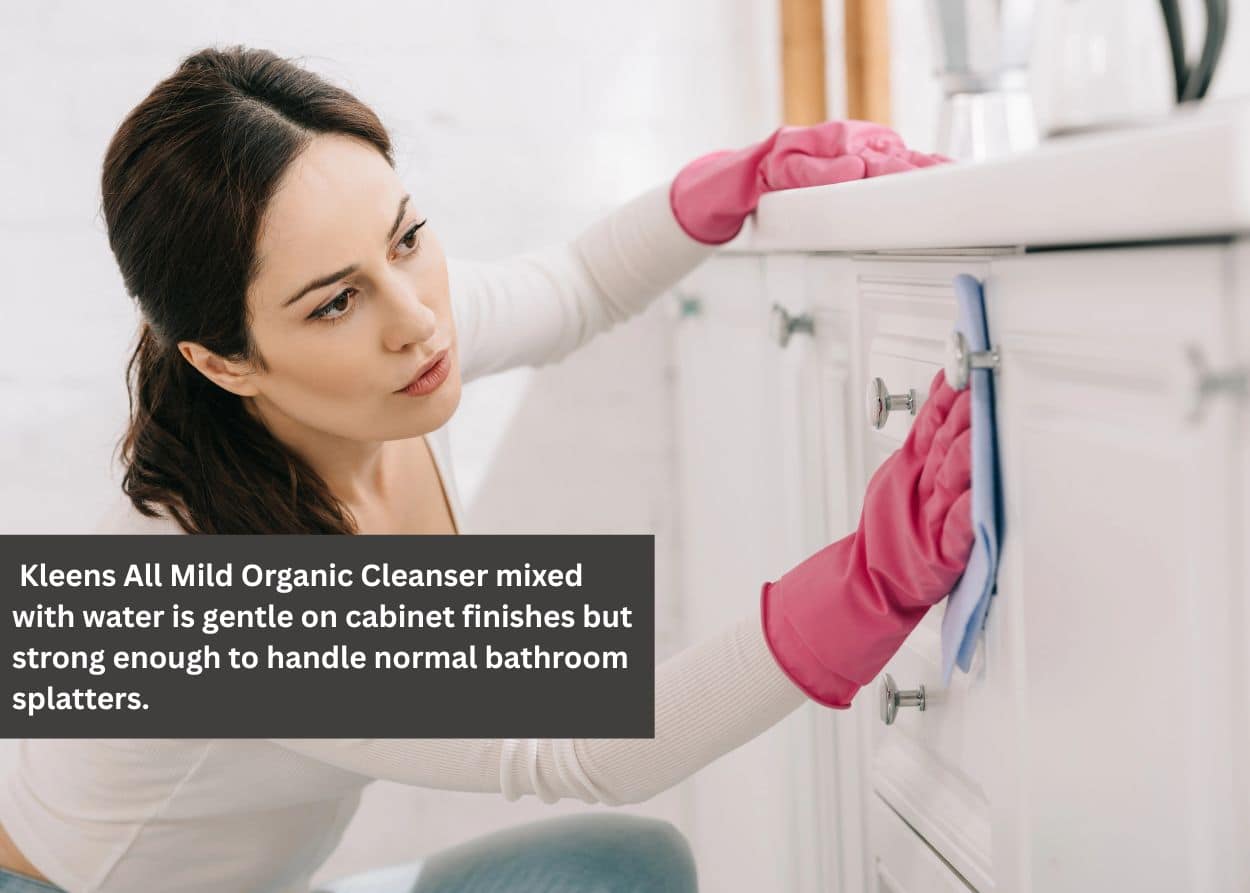
Here’s how to use it well:
- Mix Kleens All with water according to the label directions.
- Dampen (don’t soak) a soft cloth in the solution.
- Wipe cabinet doors, drawer fronts, and around hardware.
- Follow with a dry cloth so no water sits on edges or near handles.
Don’t have Kleens All on hand? A mild dish soap solution is a good backup.
What should you avoid?
The following are some of the worst offenders for wood cabinet finishes:
- Excessive water (dripping rags or soaking the surface)
- Abrasive pads like steel wool or rough scrub sponges
- Strong, all-purpose degreasers not made for wood
- Oil-heavy polishes or waxes that leave a sticky coating
- Mixing chemicals (like bleach plus other cleaners)
Think of your cabinet finish like the clear coat on a car. You wouldn’t clean your truck with steel wool and oven cleaner—your cabinets deserve the same respect.
Hardware Care: Hinges, Handles, and Soft-Close Systems
Cabinet hardware seems tough, but in a humid bathroom, it takes a beating.
Water drips from wet hands onto handles. Steam and cleaner overspray reach hinges. Over time, you end up with rusty screws, stiff hinges, and doors that don’t close properly.
These simple habits will keep your hardware working smoothly:
Clean the hardware
- Wipe knobs, pulls, and handles regularly with a damp cloth and mild cleaner.
- Dry them right away so water doesn’t sit around screw holes or decorative details.
Use a soft toothbrush for textured or detailed hardware.
Tighten and adjust
- Tighten any loose screws in knobs, pulls, and hinges.
- If doors are rubbing or crooked, use the small adjustment screws built into most hinges to straighten them.
- Check soft-close hinges and slides—if they’re not closing smoothly, they may need minor adjustment or replacement.
Five minutes with a screwdriver can add years of solid use to your bathroom cabinets and keep doors from sagging or slamming.
When It’s Time to Repair, Repaint, or Replace Your Cabinets
Even the best bathroom cabinet maintenance plan can’t save your cabinets forever. So how do you know when you’ve crossed the line from “fixable” to “time for new cabinets”?
Here are some clear warning signs:
- The cabinet box is soft, crumbling, or badly swollen, especially near the floor or under the sink.
- There’s a persistent musty or moldy smell inside the cabinet, even after cleaning and drying.
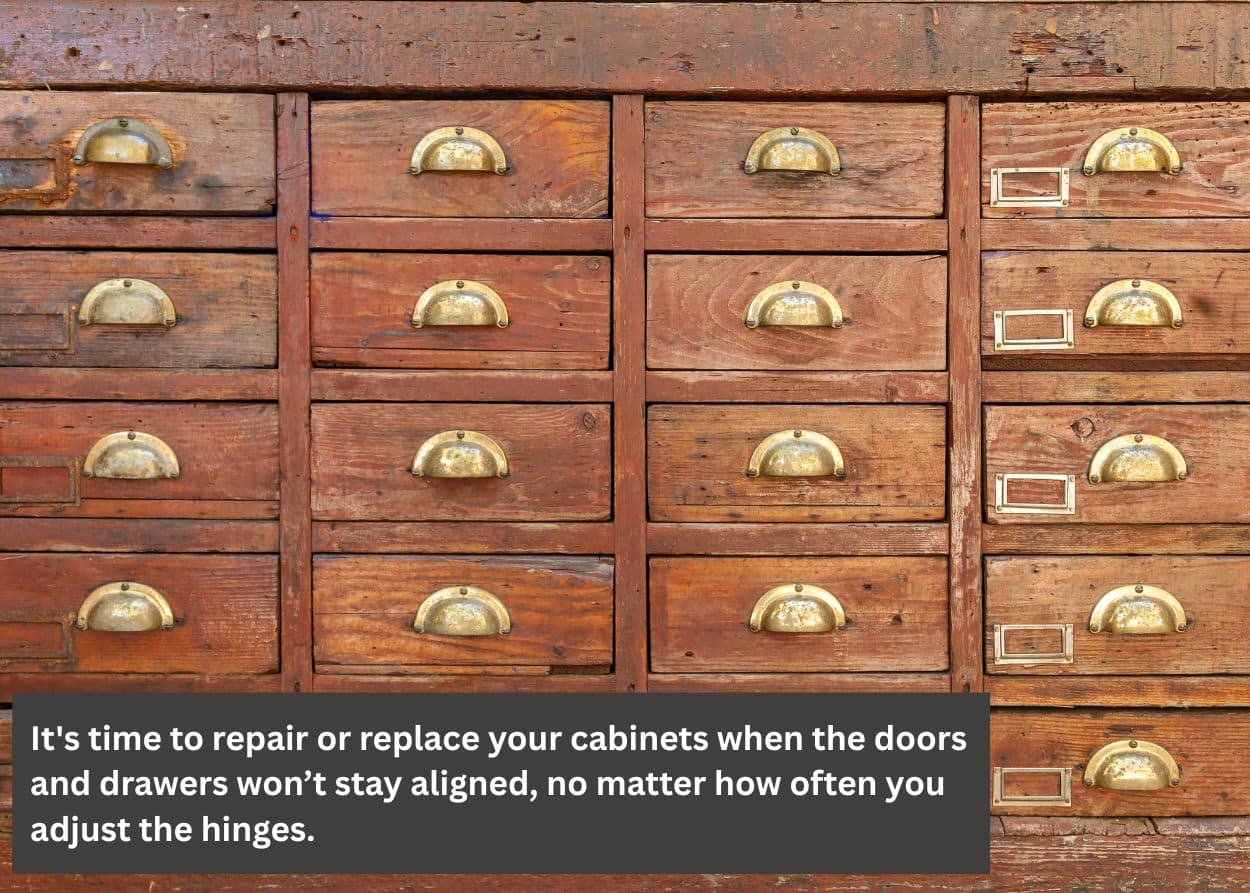
- Doors and drawers won’t stay aligned, no matter how often you adjust the hinges.
- The finish is heavily chipped, peeling, or bubbling over large areas.
- Water damage has caused the countertop or sink area to separate from the cabinet.
In these cases, repainting or swapping hardware is only a band-aid.
Sometimes the right move is refreshing what you have with better maintenance and a little paint. Other times, replacing tired cabinets is the best long-term value.
Conclusion
Picture yourself on a busy weekday morning. You flip on the bathroom light. Your cabinets still look rich and clean. The doors open and close smoothly without sagging or squeaking. The finish isn’t bubbled or peeling around the sink. There’s no musty smell when you grab towels or toiletries—just a bathroom that feels fresh and ready to help you meet the day.
If you live in North Central Indiana and you’re not sure whether your bathroom cabinets need a little care or a complete upgrade, you don’t have to figure it out alone.
At Graber Supply, we’re here to guide you—from simple maintenance questions to complete cabinet replacement. We supply kitchen and bath cabinets, countertops, and walk-in showers, and we’ll help you choose options that stand up to real-life humidity and daily use.
Here’s a simple plan of action:
- Walk through your bathroom this week and look for swelling, peeling, or musty smells.
- Start a basic maintenance routine: gentle cleaning, drying, and better fan use.
- Reach out to Graber Supply to discuss whether it’s time to upgrade your bathroom cabinets.
With the right products and simple maintenance habits, your bathroom cabinets will stay beautiful and functional for years—not just the first few months after installation.

To learn more about Graber Supply and how we can help with your next project, read these related blog posts: